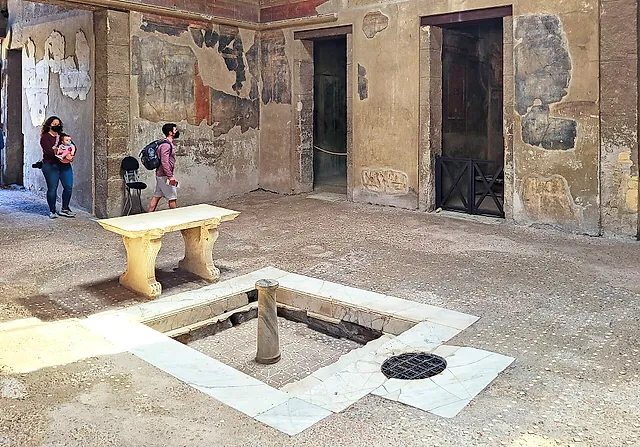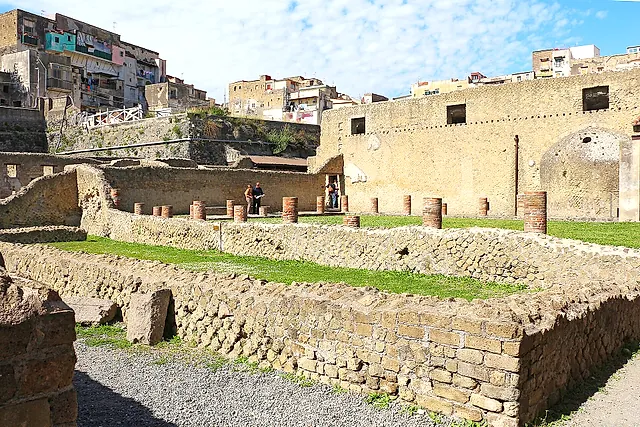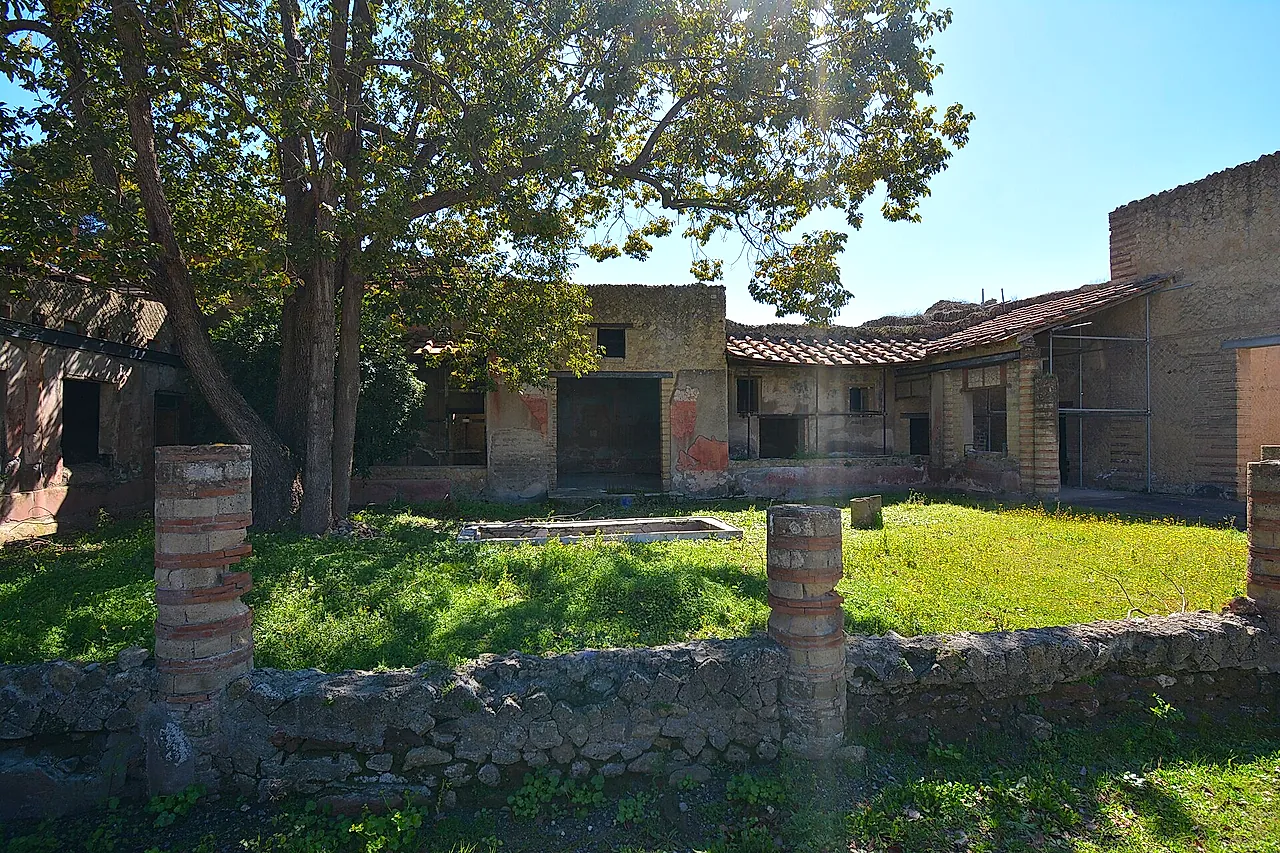
Herculaneum is a Roman town buried by the eruption of Vesuvius in AD 79. The park says the ancient town covers about 20 hectares, of which more than 4 are visible today. The rest lies under volcanic material and the modern town of Ercolano.
Book your visit
Herculaneum: Entry Ticket with Audio Guide
4.5· 1,582 reviews
from €19.50
Buy tickets →The eruption of AD 79
The eruption of Vesuvius in AD 79 buried the town. We did not recheck the details of how the town was covered for this guide, so for those we point you to the official site and to UNESCO’s description of the site.
The first plans of the Villa dei Papiri
The park’s page on the Villa dei Papiri says the first plan of the villa was drawn by Karl Weber in 1754. We could not confirm the year when exploration of the town began or the details of the later open-air excavations, so we leave those out.
Discoveries of recent decades
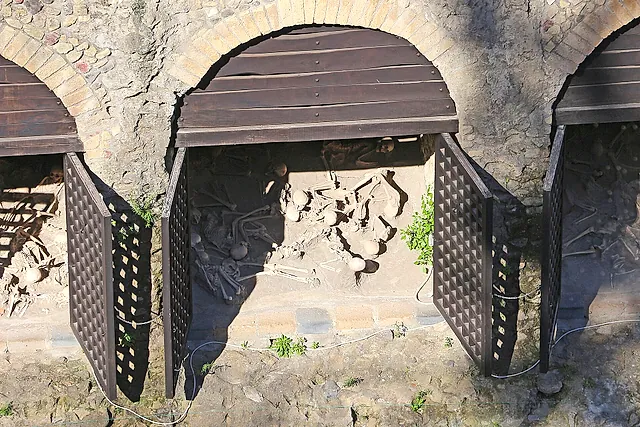
- 1980: about 300 skeletons were discovered in nine of the twelve boathouses on the ancient beach: women and men, young and old, free people and slaves. See our boathouses article.
- 1980s: the charred remains of a boat over 9 metres long were found on the beach, and are now shown in the Boat Pavilion.
- Villa dei Papiri: excavations in 1996-98 and 2007 reached a pavilion on the sea. The villa held more than 1,800 carbonised papyrus scrolls, read with X-rays, CT scans and artificial intelligence.
Recent years
The ancient beach opened to walkers in June 2024. The Casa del Mobilio Carbonizzato reopened in July 2026 after almost 30 years, in a restoration with the Packard Humanities Institute. The Villa dei Papiri and the ancient theatre are currently closed for works.
Visit it today
See what is open on our what to see page, and compare with Pompeii in Herculaneum or Pompeii.